Treading the butcher block with Újházy Ede

Hungarian actor in the mood for soup
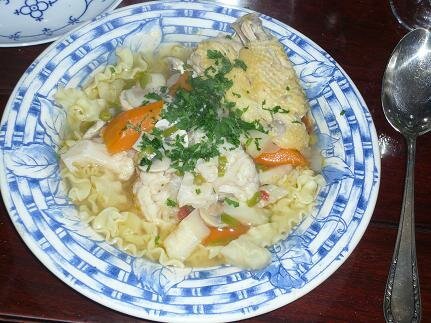
Fowl soup, Újházy style
Once upon a time, a great Hungarian actor in the 19th century had a yen for making soup–his own Hungarian version of the French poule au pot. To ensure a concentrated flavor, Újházy Ede used a rooster, then added vegetables that differed markedly in color, shape, and texture. At the end, he served the soup over delicate egg noodles to make a dish fit for King Matthias.
His friends were enchanted. Újházy was some character, as you can see in his photo. On the Budapest stage, he was Shakespeare’s Julius Caesar and Malvolio, Molière’s Harpagon, Beaumarchais’s Bartolo, and Gárdonyi’s Gabor. He had a growly voice. My friend Sanyi translated a description that said words would explode from his enormous mouth like smoke puffs from an engine. And that, actor to his bones, his favorite word was Marha!–a Hungarian expression for stupidity–that he would deliver with such unctuous rotundity or with such heartfelt softness that the object of it felt loved rather than insulted. Plus, of course, he loved soup.
George Lang, restauranteur extraordinaire, details in his Cuisine of Hungary a number of possible variations on the original Újházy Tyúkhúsleves: brown the carrots and onions in chicken fat to achieve a Transdanubian “yellow”; add a pinch of saffron for the same effect; ditto by dry browning unpeeled onions cut in half in a frying pan and adding to the soup. Or, start out by simmering a pound of beef in the soup water before beginning the recipe. Or add marrow bones for flavor, first salting the ends of the cut bones to keep the marrow from coming out during the cooking. Or serve on the bone…or remove and discard the bones before serving.
All well and good, but the original is quite heavenly–a rich chicken soup that is just perfect for these vile and viral winter nights. Really, are you beginning to wonder, like me, if winter is EVER going to end? A blizzard rages outside my windows today AGAIN in usually snowless Paris.
Which is why, as I promised, Gergely and I met the other weekend to shop for and make this excellent soup. But we were lazy, and Woodrow Wilson Market was being dismantled by the time we got there. And here’s where Paris is so nice. We just ambled over to Trocadero, crossed the river to the Eiffel Tower and crunched over snow down Champ de Mars to end up at Rue Cler and its market. Hungry and cold, we made the soup as fast as we could, the heck with the variations. Then washed it down with a flinty Sancerre and blotted the last drops with a crusty country bread–fantastic!
Újházy Tyúkhúsleves (Chicken Soup), for 6-8 people
1 fowl (your choice: rooster, stewing hen, or tender fryer), cut into 8 pieces
12 cups cold water
1 Tablespoon salt
1 teaspoon peppercorns
slice of ginger root
1 onion, chopped
2 garlic cloves, finely chopped
1 tomato (canned is fine), peeled, seeded, and chopped
3 small carrots, peeled
2 young parsnips, peeled
1 whole celery root, peeled and cut into cubes
1/2 head cauliflower, broken into flowerets
1/2 cup peas (frozen are fine)
1/2 pound mushrooms, sliced
1 green Hungarian pepper (long, thin, and spicy), chopped
parsley, for garnish
soup noodles (which are served separately)
Put the fowl in a large soup pot with the cold water, salt, and the peppercorns and ginger tied into a cheesecloth bag. Slowly bring to a simmer, removing scum as it forms. Keep at a simmer, adding the onion, garlic, and tomato, and cook for an hour (or 2 hours, if you are using a stewing hen or rooster). Keeping the heat at a simmer, add the carrots, parsnips, celery root, cauliflower, and peas and cook for an hour or more, until the vegetables are tender. Just before you are ready to serve the soup, discard the cheesecloth bag of pepper and ginger; add the sliced mushrooms and green pepper and cook 15 minutes. You may keep the chicken/rooster pieces whole in the soup–or you may fish them out, removing the meat and putting it back in the soup, then discarding the bones and skin.
While the mushrooms and green pepper are cooking, cook the soup noodles (as many as you like) separately in plenty of salted water. When done, drain, return to the pan, stir in a little butter, and keep hot until they are served. Traditionally, they are served separate from the soup.
Bring the noodles and the soup (sprinkled with minced parsley) to the table in separate dishes. Spoon the noodles into individual bowls, then ladle the soup over top.
For another variation and for recipes of Hungarian soups and other dishes, I highly recommend you visit http://www.cookbook.hu/index_angol.htm#Soups, the Hungarian recipe site (in English) of dear friend Sanyi Fenyvesi, father of my soup partner Gergely.